CodeSign Secure Documentation
  • Overview
    • About CodeSign Secure
    • Getting Started
    • Documentation Guide
    • Portal Overview
    • Troubleshooting
      • FAQ
    • Glossary
  • Reference Guide
    • Header Bar
      • CodeSign Secure Documentation
      • Swagger API
      • Profile Section
    • Dashboard
      • Key Performance Indicators
      • Issued Certificates
      • Signatures Generated
      • HSM Health Check
    • Keys and Certificates
      • Key and Certificate Lifecycle
    • App Management
    • Signing Requests
      • Approval Workflows
    • Signing Tools
    • Reports
      • Signing Request Report
      • Audit Trail
      • Certificate Report
      • Client Report
    • Logs
    • System Setup
      • Identity Store
      • Backup
      • User
      • Roles and Permissions
      • Email
      • Signing Projects
      • SSL/TLS Management
      • Environment
      • Plugins
  • Setup & Architecture
    • Identity and Access Control
    • Architecture and Concepts
    • Installation
      • Windows
        • Installing the Server
        • Ports and Protocols
        • High Availability and Backup
        • Upgrades and Compatibility
    • Security
      • Security Hardening Checklist
      • Client Authentication
      • Designing Signing Policies
  • Release Notes
    • Releases for 2026
      • v3.2.1
    • Releases for 2025
      • v3.2.0
    • Releases for 2024
      • v3.1.0
  • API Reference
    • Getting Started
    • Authorizing Requests
    • Securing API Access
    • Request and Response Conventions
    • Endpoint Reference
      • Signing
      • Signing Requests
      • Certificates
      • Applications and Environments
      • User Management
      • Permissions
      • Email
      • System Setup
      • Reports
      • Dashboard
      • License
  • Integration Guides
    • Signing Capabilities
      • Supported Formats and Platforms
      • Timestamping
      • Windows Signing - SignTool
        • Signing
        • Macro Signing
      • Apple Signing
      • AppX & MSIX Signing
      • Visual Studio ClickOnce
      • Jar Signing
      • Sign HLK/HCK using CodeSign Secure
      • NuGet Signing
      • Mage Signing
      • Sign OVA/OVF using Encryption Consulting’s Utility Tool
      • Utility Tool for code signing
      • Container Signing
      • PKCS11 Wrapper
        • APK Signing
        • OpenSSL Signing
        • XML Signing
        • JSign Tool Signing
        • Jarsigner Signing
        • GPG2, Debian & RPM Signing
      • Reproducible Build
        • Automated Hash Validation
        • Reproducible Build Process Flow
        • Pipeline Script Components
        • Hash Validation
    • CI/CD Integration
      • GitHub Actions
      • Jenkins
      • GitLab
      • Azure DevOps
      • TeamCity
      • Bamboo
      • Securing CI/CD Credentials

Plugins

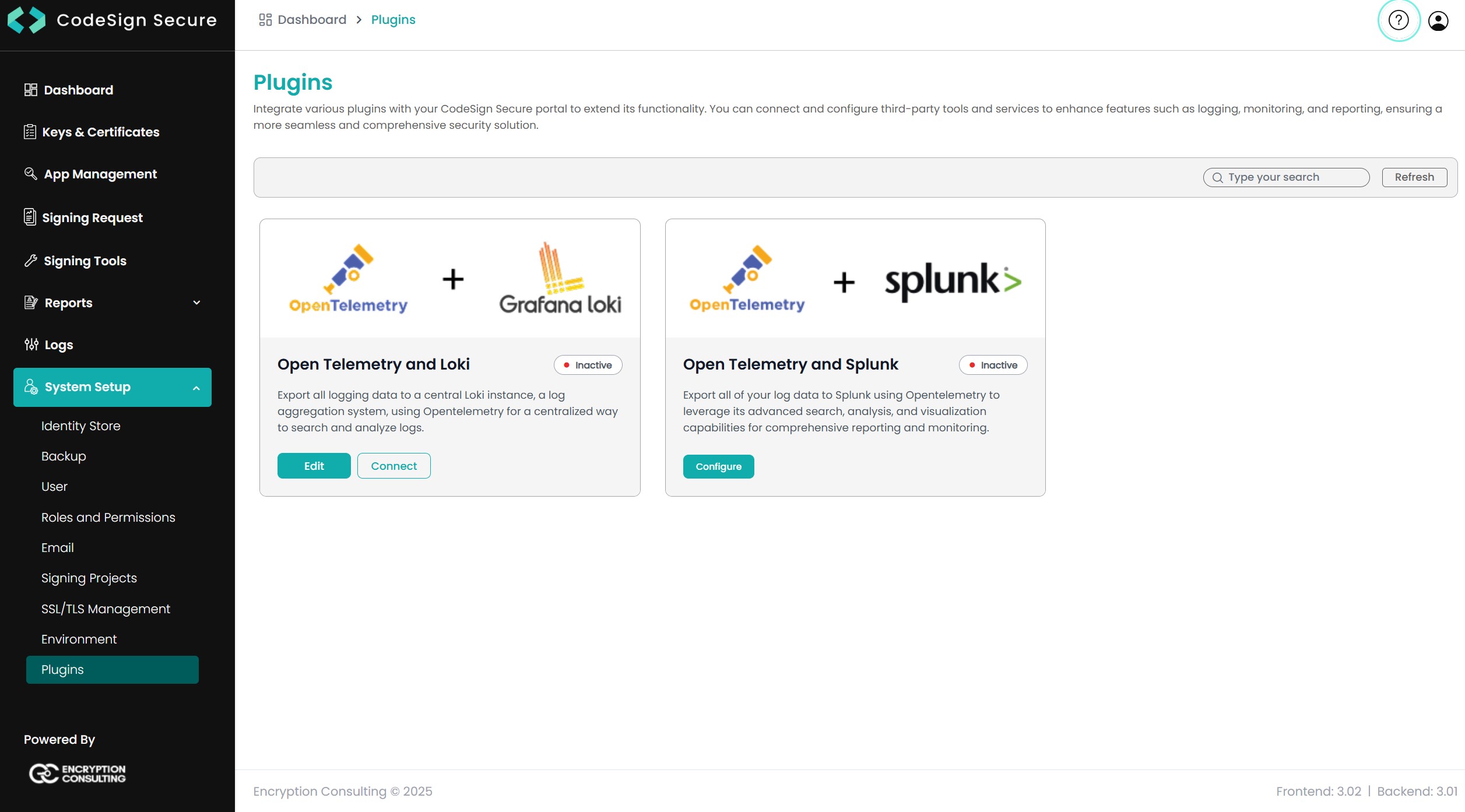
Send CodeSign Secure logs to Grafana Loki or Splunk through OpenTelemetry for central search, monitoring and alerting.

Plugins section
How plugins work
  • A plugin that has never been set up before in CodeSign Secure shows Configure.

  • A plugin that has been set up shows Edit and a Connect or Disconnect button, depending on its status.

  • After a successful connection, the server restarts within a few seconds. The page may show a server error during the restart; refresh it after a moment.

Important: Because connecting restarts the server, signing requests in progress at that moment fail. Connect plugins during a quiet period.

OpenTelemetry and Grafana Loki

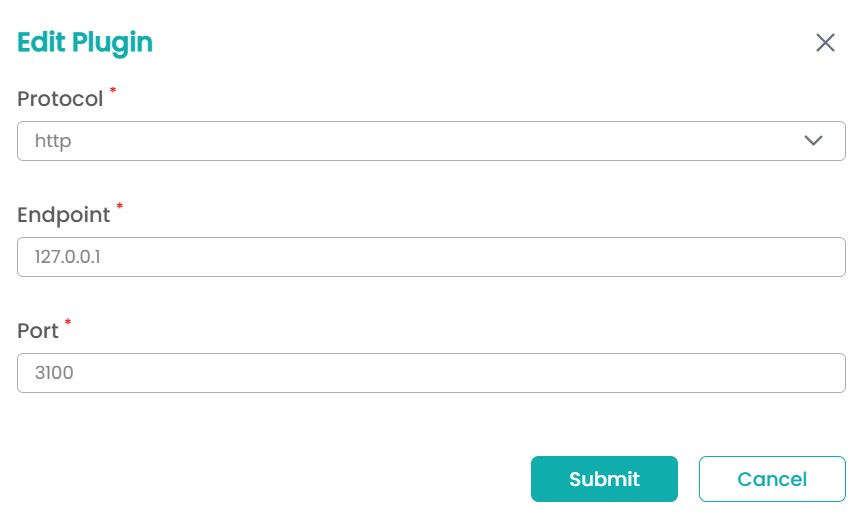
Exports all logging data to a Grafana Loki instance.

FieldRequiredDescriptionExample
ProtocolYesThe protocol used to reach Lokihttp
EndpointYesHostname or IP address of the Loki serverloki.example.com
PortYesThe Loki port3100
Loki plugin form
OpenTelemetry and Splunk

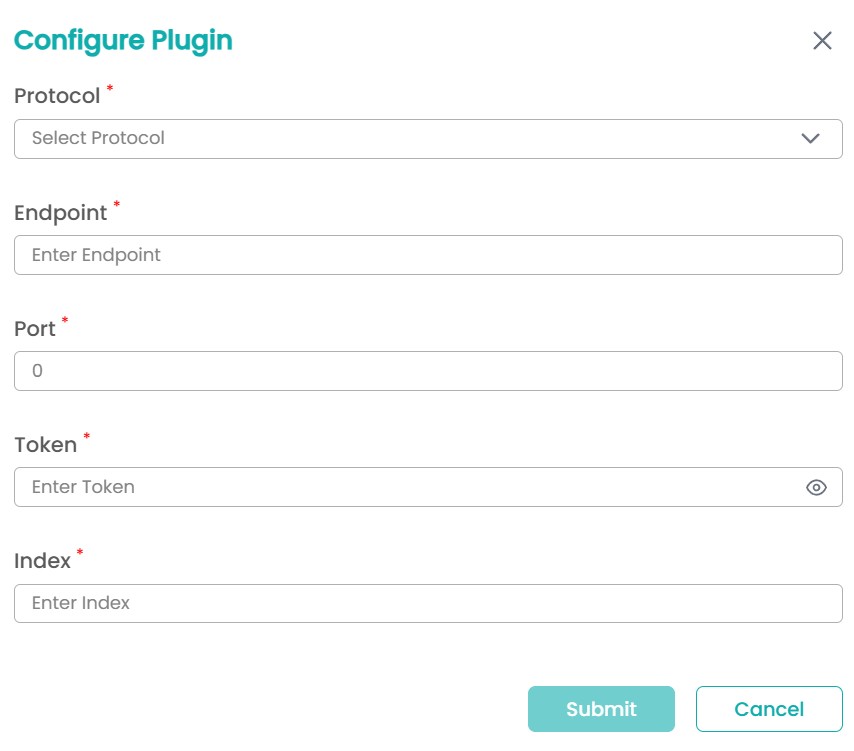
Exports all logging data to Splunk for search, analysis, and dashboards.

FieldRequiredDescription
ProtocolYesThe protocol used to reach Splunk
EndpointYesHost name or IP address of the Splunk server
PortYesThe port Splunk receives events on
TokenYesThe Splunk token that authorizes CodeSign Secure to send events, typically an HTTP Event Collector (HEC) token
IndexYesThe Splunk index the events are written to
Splunk plugin form
Recommendations
  • Create a Splunk token and index dedicated to CodeSign Secure, so you can rotate or restrict them without affecting other sources.

  • Allow the connection from the CodeSign Secure server in your firewall. See Ports and Protocols.

  • After connecting, check that new events arrive, for example, by signing a test file.

On this Page:
Support Privacy Policy Terms of Service

Copyright Encryption Consulting LLC. All rights reserved.